
Jesus Meditating: Exploring His Prayer Life and Biblical Meditation Practices for Spiritual Growth
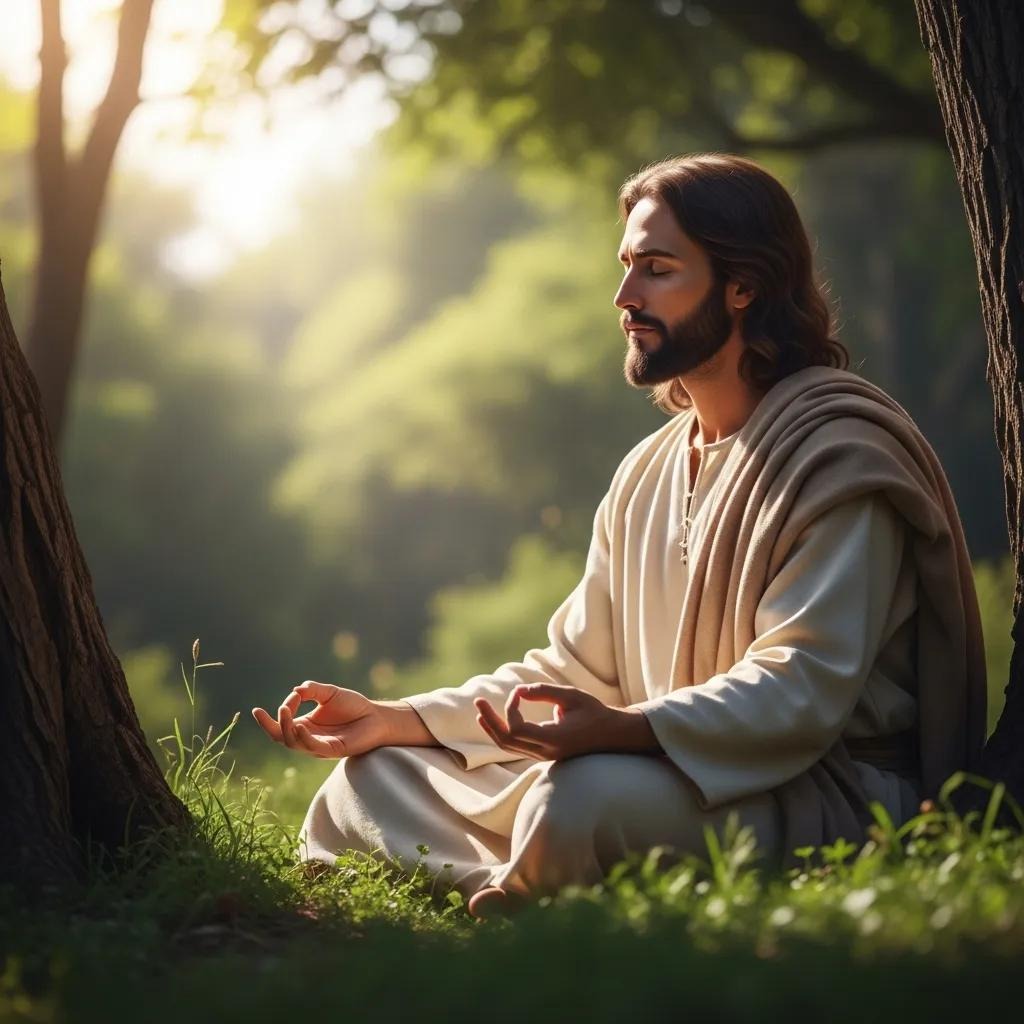
Jesus meditating refers to the ways Jesus embodied focused communion with God through prayerful reflection, solitude, and scripture-centered listening rather than the modern secular techniques of mindfulness. This article explains what the Bible reveals about Jesus’s prayer life, how he used solitude and contemplative postures, and practical steps believers can adopt to cultivate biblical meditation for spiritual growth. Many Christians wonder whether Jesus practiced meditation and what that looked like in a Jewish first-century context; answering that helps readers apply Jesus-inspired rhythms today. We will trace key scriptures that show Jesus withdrawing for prayer, unpack how Gethsemane models submission and listening to God’s will, and offer concrete practices—short routines, scripture prompts, and communal rhythms—that mirror his habits. Along the way, we note how contemporary faith-technology tools, including an AI Prayer Ring and companion AI Bible Chat and Prayer Generator, can support consistent practice without replacing scripture-centered devotion. Read on for scriptural foundations, contemplative distinctions, usable exercises, comparison tables, and practical tools to strengthen your daily devotional life.
What Does the Bible Reveal About Jesus's Prayer and Meditation?
Jesus’s prayer and meditation practices are rooted in a Jewish scriptural tradition of reflection, petition, and listening, and the Gospels portray a pattern of intentional withdrawal, sustained intercession, and Scripture-shaped submission that produced spiritual clarity and obedience. The mechanism at work is repeated, disciplined communion with the Father—Jesus rose early, withdrew to quiet places, and poured out his affections and will before God—yielding spiritual renewal and directional clarity. The value to readers is a model for combining silence, Scripture, and petition so their own devotional life becomes both contemplative and apostolic. Next we list the core passages that illustrate these habits and offer a succinct synthesis for quick reference.
Key passages that speak to Jesus's prayer life:
- Mark 1:35 — Jesus rises early to pray alone before the day's work.
- Luke 5:16 — Jesus regularly withdraws to solitary places for prayerful renewal.
- Matthew 26:36–46 (Gethsemane) — Jesus models anguished, obedient listening to the Father.
These verses show a repeated rhythm of solitude and submission that believers can emulate; the following subsections unpack the scriptural details and how Jesus used Scripture and resolve in prayer.
Which Scriptures Describe Jesus's Solitude and Prayer Habits?
Several Gospel passages describe Jesus seeking quiet places and time away from crowds to pray, demonstrating a consistent pattern rather than one isolated moment. Mark 1:35 records Jesus rising early and going out to a solitary place to pray—this indicates intentional scheduling of prayer as a priority before ministry activity. Luke 5:16 notes that despite demand, Jesus often withdrew to desolate places, showing that solitude functioned as spiritual replenishment and discernment time. Matthew 14:23 and John 6:15 also present moments when Jesus left the crowds to pray, confirming a repeated habit for rest, decision-making, and communion. Each passage suggests both posture (alone, often at dawn or night) and purpose (renewal, discernment), giving practical cues for believers who need rhythm and structure in their devotion.
These examples lead directly into how Jesus engaged Scripture and God's will within those solitary moments, particularly as he faced mission-critical decisions and suffering.
How Did Jesus Meditate on Scripture and God's Will?
Jesus’s meditation integrated Scripture, teaching, and submission to the Father, revealing a pattern of listening, quoting, and embodying God’s word in life and prayer. He frequently cited Hebrew Scriptures in teaching and temptation narratives, showing that Scripture guided his understanding of mission and ethics; in Gethsemane his prayers reflected both lament and surrender—“not my will, but yours”—which is the clearest model of meditative submission to God’s will. The meditative elements include focused memory (recalling Scripture), attentive listening (waiting for the Father), and obedient action (aligning choices with divine purpose). This triangulation—Scripture informing prayer, prayer producing surrender, and surrender leading to action—provides a practical model for believers who wish to combine biblical meditation with daily obedience.
Understanding how Jesus merged Scripture and submission prepares us to examine the role of solitude itself in shaping spiritual reflection and formation.
How Did Jesus Use Solitude for Spiritual Reflection?
Jesus used solitude strategically as a means of renewal, discernment, and preparation, showing that withdrawal from noise and obligations is a spiritual discipline with concrete outcomes. The mechanism here is separation for the sake of encounter: the act of withdrawing creates space to hear, to grieve, and to decide according to God’s will, producing clarity, emotional resilience, and missional resolve. Practically, solitude produced restoration before a busy ministry day, discernment before major choices, and wholehearted obedience in crisis; these outcomes demonstrate why solitude remains a foundational practice for spiritual formation today. The next subsections examine the significance of those withdrawals and how modern believers can adapt them.
When I began paying closer attention to how Jesus prayed, I noticed how often he stepped away from noise to listen rather than speak. Trying this for myself—short moments of silence paired with a single verse—changed the tone of my prayer life. Instead of rushing through requests, I learned to pause, sit with Scripture, and surrender my agenda. Those quiet withdrawals didn’t make my days less busy, but they did make my faith more grounded and attentive.
Jesus’s withdrawals consistently resulted in spiritual replenishment and clearer mission focus, and understanding that link helps believers create their own patterns for quiet reflection and faithful action.
What Is the Significance of Jesus's Withdrawals to Quiet Places?
Jesus’s habit of withdrawing to quiet places carried theological and pastoral significance: it modeled dependence on the Father, allowed space for discernment, and demonstrated that even the Son needed replenishment. Theologically, solitude is not avoidance but a preparatory practice that grounds ministry in communion with God; pastorally, it normalizes periods of rest and reflection amid busyness. Biblical examples—such as Jesus praying alone before choosing the Twelve or seeking God before major teaching—show that solitude produced providential clarity and emotional steadiness. For believers, the significance is twofold: solitude fosters intimacy with God and protects integrity in ministry, offering a rhythm that sustains spiritual fruitfulness over time.
Recognizing this significance naturally suggests how to translate Jesus’s withdrawals into accessible practices for contemporary life.
How Can Jesus's Solitude Inspire Modern Christian Practices?
Jesus’s pattern of brief and regular withdrawals can be adapted to modern rhythms through micro-retreats, scheduled prayer slots, and Sabbath-like pauses that fit busy schedules while producing deep communion. For example, a daily five-to-twenty-minute early-morning withdrawal centered on Scripture and silence mirrors Mark 1:35 and offers steady renewal; weekly longer pauses or half-day retreats provide space for discernment and soulful recalibration. Church leaders can model and encourage these practices by creating protected times for staff or congregational micro-retreats, which cultivates culture that values rest and attentive presence to God. These practical adaptations show that solitude need not be lengthy to be transformational—consistent, intentional withdrawal yields measurable spiritual renewal.
Translating solitude into practical steps points us toward concrete contemplative methods and how they differ from other prayer forms, which we examine next.
What Is Christian Contemplative Prayer and How Did Jesus Exemplify It?
Christian contemplative prayer is a posture of receptive listening and attentive silence before God, distinguished by its emphasis on presence rather than primarily on asking or teaching. The mechanism involves quieting the self, centering on God’s presence, and allowing Scripture or short phrases to shape attention; the result is deepened intimacy, clearer spiritual direction, and a reorientation of the will toward God. Jesus exemplified contemplative posture through long, attentive periods of prayer where listening and surrender were paramount, especially in moments of testing and sorrow. Below we compare contemplative prayer with other forms to clarify when each approach serves spiritual formation and mission.
Understanding these differences helps believers choose appropriate prayer forms for particular needs and seasons.
- Christian contemplative prayer emphasizes silence and listening in God’s presence.
- Intercessory prayer focuses on petitioning for others with specific needs.
- Liturgical prayer gives structure through shared words, scripture readings, and sacraments.
Each approach has its place; contemplative prayer deepens interior life while intercession and liturgy advance community and mission, and the interplay among them reflects Jesus’s balanced prayer life.
How Does Contemplative Prayer Differ from Other Forms of Prayer?
Contemplative prayer differs from intercessory and petitionary prayer in posture, duration, and goal: it prioritizes silent listening and abiding in God’s presence rather than presenting lists of requests. Contemplative prayer often uses brief scripture phrases or centering words to anchor attention and can last from a few minutes to extended sessions; its goal is intimacy and transformation rather than immediate problem-solving. Intercessory prayer, by contrast, is action-oriented and outward-facing, aiming to influence circumstances through petition; liturgical prayer organizes communal worship around Scripture and sacraments. Practically, contemplative prayer is best for formation and alignment of the heart, while other forms serve needs of community, justice, and practical petition.
This contrast clarifies what believers can learn from Jesus’s example of deep communion, which we summarize next.
What Can Believers Learn from Jesus's Example of Deep Communion with God?
Believers can draw several lessons from Jesus’s example: prioritize regular withdrawal for prayer, combine Scripture with silent listening, persist in honest lament and surrender, and let prayer shape mission rather than serve merely as a tactic. Each lesson has a biblical anchor—early rising to pray (Mark 1:35) supports priority-setting, and Gethsemane offers a model of lament followed by surrender that leads to obedient action. Practically, believers should schedule regular times for silence, memorize short scriptural phrases to center on, cultivate honest prayers of sorrow or confusion, and finish prayer with a resolute “thy will be done.” These habits cultivate a prayer life that feeds both inner communion and outward service.
With these lessons in view, the article now turns to actionable steps readers can use to build Jesus-inspired meditative practices into daily routines.
How Can Believers Apply Jesus's Meditative Practices Today?
Applying Jesus’s meditative practices today involves simple, repeatable routines that combine Scripture reading, silence, breath-centered focus, and brief journaling to translate contemplation into obedience. The mechanism is habit formation: small consistent practices wired into daily life produce spiritual formation over months, resulting in clearer conscience, greater peace, and decisions aligned with God’s will. The value for readers is a practical toolkit—time-based options for busy schedules, sample scripture prompts, and accountability methods—to cultivate a resilient devotional rhythm. Below are numbered steps that function as a ready-to-use template for individuals and church leaders wanting to emulate Jesus’s habits.
These steps give concrete direction for daily devotion and lead into an Entity-Attribute-Value table that helps compare recommended practices.
- Begin with a scheduled short withdrawal: Set 5–15 minutes at a consistent time each day to read a short Scripture and sit in silence.
- Center on a short scriptural phrase: Repeat a verse or line (e.g., “Not my will but yours”) and listen for impressions rather than producing content.
- Use breath or a brief centering prayer: Breathe slowly while reciting a short invocation to steady attention and body.
- Journal one insight and one application: Write a line summarizing what you heard and one concrete step for the day.
- Practice weekly extended silence: Reserve a longer weekly slot (30–90 minutes) for deeper reading, confession, and discernment.
- Create accountability: Pair with a friend or small group to share rhythms and encourage persistence.
These steps offer flexible options for different life stages and pave the way for a compact EAV comparison of practices.
Intro to EAV table: The table below compares several Jesus-inspired spiritual practices by time, scriptural anchor, and practical benefit to help readers choose what fits their season of life.
| Practice | Typical Time | Scriptural Anchor |
|---|---|---|
| Solitude Micro-Withdrawal | 5–15 minutes daily | Mark 1:35 (early prayer) |
| Centering on Scripture | 1–10 minutes per session | Psalm meditation traditions |
| Breath-Centered Prayer | 2–5 minutes | “Be still” resonance (Psalm 46:10 motif) |
| Weekly Extended Retreat | 30–90 minutes weekly | Luke’s extended prayer episodes |
This comparison clarifies which practices fit typical daily constraints and spiritual aims; selecting one or two consistent practices is preferable to many sporadic attempts.
After establishing these practical steps, many readers ask how biblical meditation actually advances spiritual growth; the next subsection addresses those outcomes and anticipated results.
What Practical Steps Reflect Jesus's Prayer Life for Daily Devotion?
A daily devotional routine modeled on Jesus emphasizes regularity, Scripture focus, and surrender, with adaptable timings for busy people, leaders, and congregations. Start with a simple framework: a brief Scripture reading (2–3 minutes), a silent listening period (3–10 minutes), a short vocal prayer of surrender (1–2 minutes), and a one-line journal action for the day; this totals 6–15 minutes and fits most mornings. For pastors and leaders, adding a weekly longer slot for visioning and intercession supports pastoral care and decision-making. Measuring spiritual progress can be as simple as tracking consistency over 30-day cycles and noting changes in clarity, patience, and obedience. These micro-habits translate Jesus’s rhythms into sustainable devotional architecture for modern life.
This practical routine sets the stage for understanding how biblical meditation benefits spiritual formation in measurable ways.
How Does Biblical Meditation Enhance Spiritual Growth?
Biblical meditation enhances spiritual growth by improving Scripture retention, fostering inner peace, and aligning desires with God’s will, which in turn produces more faithful choices and resilient discipleship. Mechanistically, repeated exposure to Scripture coupled with silence strengthens memory encoding and makes God’s priorities accessible under stress, yielding observable outcomes such as reduced anxiety, increased clarity, and more consistent obedience. Contemporary reflections and pastoral observation show that disciplined meditation contributes to spiritual fruit—patience, compassion, and wisdom—while providing a theological rationale grounded in Jesus’s example. With this practical and theological support in view, technology can assist habit formation without replacing the core practices described above.
Before moving into product-focused tools, the next section briefly introduces how technology can support consistent practice without supplanting Scripture-centered formation.
Brief integration note: Practical devotional steps often require consistency and occasional prompts; modern aids that preserve privacy and encourage rhythm can be helpful for busy believers seeking to keep Jesus-like patterns of prayer and solitude. ConfideIn.com, a faith-technology company, offers tools designed to support these rhythms through discreet, scripture-centered prompts and community features that respect anonymity while nurturing spiritual connection.
| Practice Tool | Attribute | How It Supports Meditation |
|---|---|---|
| AI Prayer Ring | Privacy-enabled NFC delivery | Provides brief scripture prompts and gentle reminders during micro-withdrawals |
| AI Bible Chat | Contextual scripture support | Offers quick, scripture-centered explanations to deepen short devotional sessions |
| AI Prayer Generator | Prayer scaffolding | Generates concise prayer prompts that help users articulate lament and surrender |
How Does ConfideIn's AI Prayer Ring Support Jesus-Inspired Meditation?
ConfideIn's primary offering, the AI Prayer Ring, is an AI-NFC wearable built to deliver mood-matched Bible verses and anonymous blessings via a simple phone tap; it was distributed widely through a giveaway of 7,700 units beginning in January 2024 aimed at U.S. churches and believers to foster spiritual connection. The mechanism by which the Prayer Ring supports meditative practice is subtle reinforcement: brief scripture prompts at moments of withdrawal create anchor points for centering and listening, while anonymous blessing exchanges cultivate communal intercession without social pressure. The practical value for users is maintaining a daily rhythm through small, frequent reminders and scripture nudges that dovetail with the micro-practices described earlier. Below we break down specific features and map each to common contemplative steps.
This product-focused exploration shows how tools can augment—not replace—scripture-centered devotion and leads into detailed feature examples.
What Features of the AI Prayer Ring Facilitate Prayer and Reflection?
The AI Prayer Ring combines NFC tap scripture delivery, mood-matching algorithms for verse selection, anonymous prayer exchange, and subtle reminder functionality to support brief, repeatable moments of reflection. NFC taps give users immediate access to a short, relevant Bible verse—ideal for five- to ten-minute micro-withdrawals—while mood-matched verses help align Scripture with the user's felt state, making meditation more resonant. Anonymous blessing exchange fosters intercessory community without exposing personal details, encouraging mutual prayer in a low-stakes way. These features map to meditation steps by supplying scripture anchors, prompting silence, and connecting users with communal support; the ring thus functions as an unobtrusive spiritual habit-builder.
A compact EAV table below compares product features, attributes, and supporting examples to clarify how the ring functions in real devotional contexts.
| Feature | Attribute | Practical Example |
|---|---|---|
| NFC Scripture Tap | Instant scripture access | Tap ring, receive a short verse for a 5-minute centering pause |
| Mood-Matched Verses | Contextual relevance | System suggests Psalm lines when the user indicates sadness |
| Anonymous Blessings | Privacy in community prayer | Exchange short blessing taps between church members without revealing identity |
How Do AI Tools Like the AI Bible Chat and Prayer Generator Enhance Spiritual Practice?
- Feature Support: AI tools supply immediate scriptural context and prayer scaffolding.
- Privacy and Accessibility: Anonymous interactions lower barriers for communal prayer.
- Habit Formation: Regular prompts and easy access sustain short meditation habits.
Each of these points highlights how technology can function as a faithful servant to spiritual disciplines rather than a replacement for them.
For further inquiries about ConfideIn's mission or specific tools, you can easily reach out to the team.
This article’s content has surveyed scriptural evidence, contemplative distinctions, practical routines, and supportive technology designed to help believers develop Jesus-inspired meditative practices.
Frequently Asked Questions
1. What are the benefits of incorporating Jesus's meditation practices into daily life?
Incorporating Jesus's meditation practices into daily life can lead to enhanced spiritual growth, improved emotional resilience, and a deeper connection with God. By prioritizing solitude and Scripture, believers can experience reduced anxiety, increased clarity in decision-making, and a more profound sense of peace. These practices encourage regular reflection, helping individuals align their desires with God's will, ultimately fostering a more faithful and obedient lifestyle. Regular engagement with these meditative habits can transform one's spiritual journey, making it more intentional and fulfilling.
2. How can I create a routine that reflects Jesus's prayer life?
To create a routine that reflects Jesus's prayer life, start by scheduling consistent times for prayer and meditation. Begin with short daily withdrawals of 5-15 minutes, focusing on Scripture and silence. Incorporate elements like breath-centered prayer and journaling to capture insights and applications. Additionally, consider setting aside longer periods weekly for deeper reflection and discernment. This structured approach mirrors Jesus's habits and allows for spiritual renewal, helping you cultivate a meaningful and sustainable devotional life.
3. What role does silence play in Jesus's meditation practices?
Silence plays a crucial role in Jesus's meditation practices as it creates space for listening and reflection. In moments of solitude, Jesus withdrew from distractions to commune with the Father, allowing for deeper discernment and clarity. This practice of silence fosters an environment where believers can hear God's voice, process their thoughts, and align their will with divine purpose. Emphasizing silence in prayer helps cultivate a more profound intimacy with God, enabling individuals to engage in meaningful dialogue and spiritual growth.
4. How can modern technology support biblical meditation?
Modern technology can support biblical meditation by providing tools that facilitate consistent practice without replacing traditional methods. For instance, apps and devices can offer scripture prompts, reminders for prayer, and community features that encourage accountability. Tools like the AI Prayer Ring deliver mood-matched Bible verses, helping users center their thoughts during micro-withdrawals. These technological aids can enhance the meditative experience, making it easier for believers to integrate spiritual practices into their busy lives while maintaining a focus on Scripture.
5. What are some common misconceptions about meditation in a Christian context?
Common misconceptions about meditation in a Christian context include the belief that it is solely a secular practice or that it promotes emptying the mind. In reality, Christian meditation is about filling the mind with Scripture and focusing on God's presence. It emphasizes listening, reflection, and prayer rather than detachment. Additionally, some may think meditation is only for the spiritually advanced, but it is accessible to all believers seeking a deeper relationship with God. Understanding these distinctions can help integrate meditation into a vibrant faith life.
6. How does Jesus's example of prayer inform communal practices among believers?
Jesus's example of prayer informs communal practices by highlighting the importance of shared spiritual experiences and intercession. His habit of praying with others, as seen in the Gospels, encourages believers to gather for prayer, fostering a sense of community and mutual support. This communal aspect of prayer can enhance accountability and deepen relationships within the church. By following Jesus's model, believers can create environments where collective prayer becomes a source of strength, encouragement, and spiritual growth for all involved.
7. What specific scripture passages can guide my meditation practice?
Several scripture passages can guide your meditation practice, including Mark 1:35, where Jesus rises early to pray, and Luke 5:16, which emphasizes his regular withdrawal to solitary places. Matthew 26:36-46, depicting Jesus in Gethsemane, serves as a powerful model of anguished prayer and submission to God's will. Additionally, Psalm 46:10, "Be still, and know that I am God," encourages silence and reflection. These passages provide a solid foundation for meditation, helping believers focus on God's presence and guidance in their lives.